


Here is the assumption almost every owner makes. You buy the boat, you buy the policy, you pay the premium, and you are covered. If something goes wrong, the insurer pays. That is what insurance is for.
Over the last several months I have watched a run of cases that should make every yacht owner read their policy again, slowly. Because a growing number of marine insurers are not simply denying claims. They are declaring the entire policy void from the day it started, handing back the premium, and in some cases suing the owner in federal court before the owner can sue them. And they are doing it over things that had nothing to do with the loss.
This is not a scare piece, and it is not legal advice. It is a broker telling you how the machinery actually works, so the coverage you are paying for is real coverage and not just a feeling.
The fine print that can erase your whole policy
Marine insurance is its own world. It is governed largely by federal admiralty law, not the ordinary consumer-friendly rules most people expect from their auto or homeowner policy. Two features of that world catch owners off guard.
The first is the express warranty. Your policy contains promises you make about the boat and how you keep her. Some are obvious, some are buried. A classic example: the fire suppression and portable fire extinguishers must be professionally inspected, tagged, and certified every year. Under long-standing marine insurance doctrine, if you breach an express warranty, the insurer can treat the policy as void from inception, and here is what stings, it does not always matter whether the breach had anything to do with what actually went wrong.
The second is uberrimae fidei, the doctrine of utmost good faith. Marine insurance holds you to a higher duty of disclosure than most policies. If you failed to disclose something material when you applied, a prior grounding, the real purchase price, a past claim, the insurer can rescind the whole policy after a loss, even if you never intended to mislead anyone.
Real cases, not hypotheticals
These are not law-school what-ifs. Look at what has actually been filed.

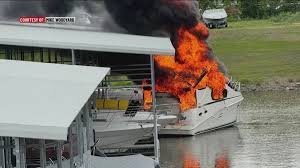
Months earlier, a 2005 Manta 44 named Blues Cruise caught fire while docked and unoccupied in Marathon, Florida. The owner had paid a premium north of ten thousand dollars. The insurer, a Lloyd's representative, voided the policy from inception and filed a preemptive declaratory judgment action rather than pay. The cited reason: two untagged handheld extinguishers and a machinery-space system that was overdue for service. No one was even aboard to use an extinguisher, and the fire started in the saloon and helm area. The safety gear had no connection to the loss. The same insurer had reportedly voided another policy over a boat carrying six mooring lines instead of the ten the policy required.
"The dangerous moment is not when a claim gets denied. It is when you learn, after the loss, that the policy you were counting on was voided from the day you signed it."Clark Haley, One Water Yacht Group
The good-faith doctrine bites just as hard. In QBE Seguros v. Morales-Vazquez, the First Circuit upheld a marine insurer voiding a yacht policy after a 2014 fire because the owner had not disclosed a prior 2010 grounding when he applied. The court found the omitted history material, and the policy was treated as void from inception. In Quintero v. GEICO Marine, the Eleventh Circuit reached a similar result on a stolen-vessel claim, holding that a material misrepresentation renders a marine policy void from the start. Different facts, same lesson: what you say when you buy the policy governs whether it pays when you need it.
The warranties hiding in a typical policy
Fire extinguishers get the headlines because the cases are vivid, but they are only one of several conditions that can quietly gut your coverage. Watch for these.
Annual safety-equipment certification. Extinguishers and fixed suppression systems inspected, tagged, and certified on schedule by a qualified professional, not just present on board.
A current survey. Many policies require a recent condition and value survey, and a survey that lapsed by even a short window, or was done by the wrong type of surveyor, can be enough to fight a claim.
The seaworthiness warranty. Every hull policy carries an implied promise that the vessel is fit for her purpose, when coverage attaches and each time she leaves the dock. Knowingly getting underway with a problem you were aware of, a failing fire system, a known leak, can void coverage for the loss that follows.
Lay-up and navigation limits. Policies often restrict where and when you can run the boat, a hurricane-season lay-up period, a geographic boundary, a named-storm haul-out plan. Cross the line, and coverage for a loss on the wrong side of it can evaporate.
Named-operator and maintenance conditions. Some policies require a qualified captain aboard above a certain size or in certain waters, and nearly all exclude damage that flows from deferred maintenance rather than a sudden accident.
What a yacht owner should actually do
Read your warranties, then read them again. Find every place the policy says you must do or maintain something. Those are the trip wires. If a term is unclear, ask your insurer or agent to explain it in writing before you have a claim, not after.
Certify your safety gear every year, on a calendar. Get the extinguishers and suppression systems professionally inspected and tagged on schedule, and keep the paperwork. This is the single cheapest way to close the door the recent cases walked through.
Keep your survey current. Know when your policy requires a survey and by whom, and do not let it lapse. Fix the survey's recommendations and keep the records.
Document your maintenance. Dated receipts, service logs, and photos are what separate a covered sudden loss from an excluded maintenance problem. Good records also protect your resale value, so this pays you twice.
Disclose everything when you apply. Prior groundings, claims, damage, the real purchase price, who will run the boat. Full disclosure up front is what keeps the policy from unraveling later.
Respect your lay-up and navigation terms. Know your storm plan and your geographic limits before you plan the trip, not after you cross the line.
If a claim is ever denied or a policy is voided, that is the moment to talk to a marine insurance attorney about your specific situation. Some of these voidances get challenged, and a few states, Florida among them, limit an insurer's ability to void over a breach that did not increase the actual hazard. But that is a fight you would much rather never have.
Where a broker fits in
I do not sell insurance, and I am not your lawyer. What I can do, as part of walking a client through a purchase, is make sure insurance is a real conversation and not an afterthought, help you line up a reputable marine surveyor, and point you toward agents who write yacht policies for a living and will actually explain the warranties instead of glossing over them. The goal is simple. When you cast off, the coverage you are paying for is coverage you can count on.
If you are buying a boat, or you just want a second set of eyes on how your coverage fits the way you use her, I am glad to talk it through. Reach out to Clark Haley at Haley Yachts and we will make sure insurance is handled like the serious part of ownership it is, before you need it. It is a normal part of how we work with owners and buyers.